
FIND YOUR NEXT PUZZLE
Sliding block puzzle games: which style is yours?
Sliding block puzzle games share a satisfying idea: move what is already on the board to make a better arrangement. The goal might be to put numbers in order, free a trapped car or clear blocks through matching gates. Those small differences change what you need to notice and plan.
We make Jumble Gate, a matching-gate sliding puzzle coming soon to iOS and Android. This guide compares puzzle styles; our separate sliding block strategy guide explains the moves in our game.
Three ways to play with space
| Style | Goal | Main question |
|---|---|---|
| Numbered tiles | Restore the tile order. | Where must the empty square go next? |
| Traffic escape | Free a target vehicle. | Which blocking vehicle needs room? |
| Matching gates | Clear blocks through their color gates. | Which exit creates useful space? |
Numbered tiles: build an ordered board
The classic 15-puzzle has fifteen numbered tiles and one empty square on a four-by-four board. You slide a neighboring tile into the gap and work toward numerical order. Simon Tatham’s Fifteen documentation explains that version’s rules and controls.
Here, the pieces stay on the board. Moving a tile also moves the gap, so a useful move can take a number away from its final position temporarily. Choose this style if you enjoy restoring order through a sequence of small adjustments.
Traffic escape: open one important route
In ThinkFun’s Rush Hour, cars and trucks block a red car’s way out. The puzzle centers on clearing that escape route. The vehicles are obstacles to rearrange, rather than a collection you must sort into numerical order.
This style suits a question you can keep in mind throughout a solve: what is preventing the target from leaving? A piece far from the exit can still matter if it occupies the only space another vehicle can use.
Matching gates: clear the whole arrangement
Jumble Gate gives blocks their own matching color exits. Each clear removes a piece, changing the space available for the remaining shapes. The puzzle is about the order of those clears as well as each route.
Blocks keep their orientation while sliding horizontally or vertically. A bent piece needs room for its whole shape, and a block touching the board’s edge still needs the correct gate and alignment. Our color block puzzle guide explains how this differs from placing or sorting colored pieces.
An example: space is part of the solution
Jumble Gate’s first Classic board starts full. The lower lime block can leave through its matching gate, opening room above the coral block. That space lets coral move up, which lets amber shift left into line with its bottom exit.
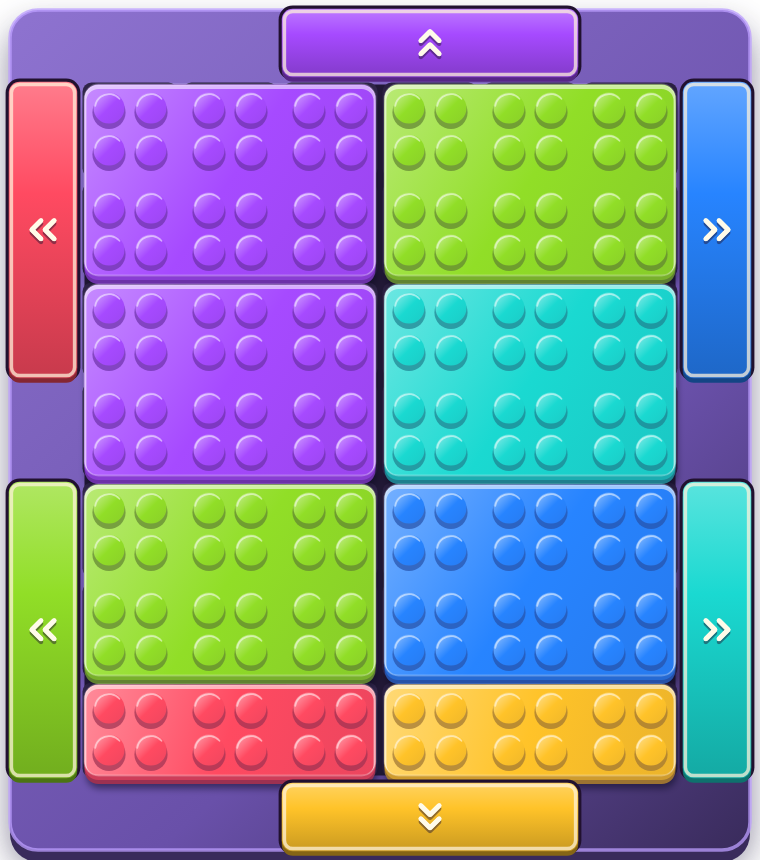
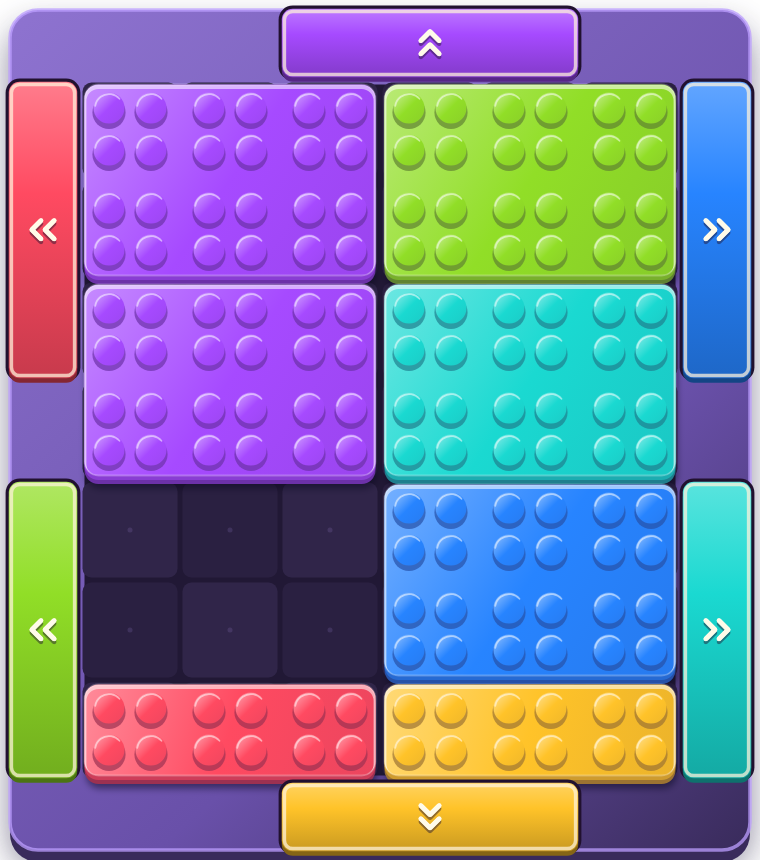
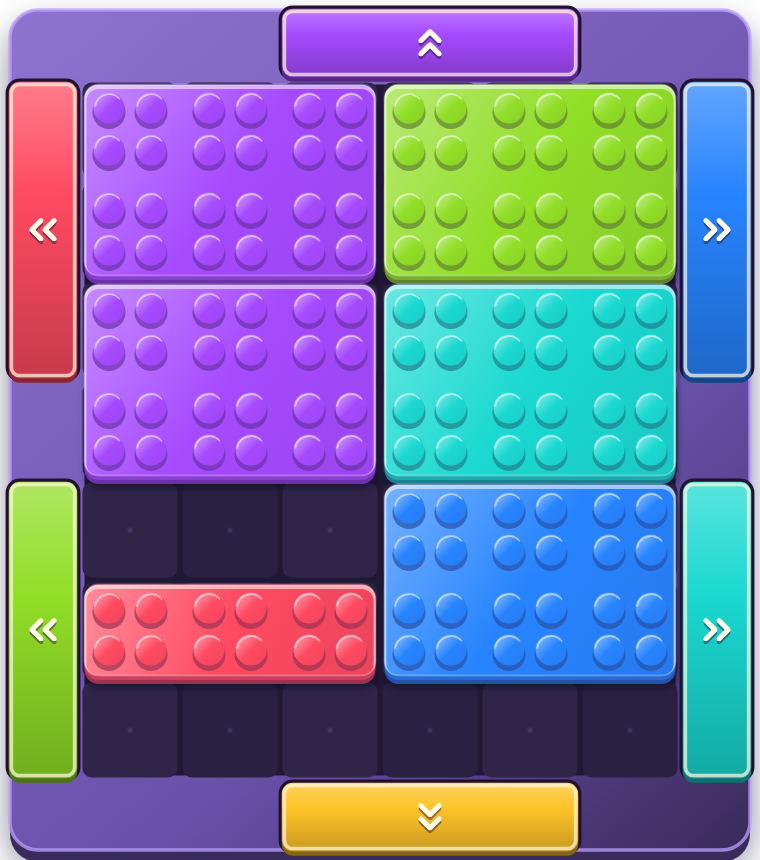
The useful question is not simply “Can this block move?” It is “What will that move make possible?” Follow the full worked opening when you want to learn the sequence.
Choose a game that fits your break
- For deliberate planning: check for an untimed mode and clear restart or undo controls. Jumble Gate’s Relaxed play disables the countdown for new puzzles.
- For a commute: check which boards are stored on your device. Our offline guide explains why downloaded content and new daily content can behave differently.
- For variety: alternate sliding puzzles with word or number challenges from our daily puzzle guide.
Start with the goal that sounds most appealing: restore, escape or clear. If matching gates is your choice, check Jumble Gate’s mobile release information. For a gentler pace, explore our relaxing puzzle recommendations.
Published 7 November 2026 by Genis Labs, the maker of Jumble Gate. External game descriptions are based on the linked official sources, not hands-on reviews. Check each publisher for current availability.